

How to Plan a 50-Piece Kids Bottle Trial Order
A 50-piece trial order works best when it tests one clear product hypothesis, not when it spreads attention across too many unrelated bottles. Select a hero model, define the customer and channel, plan the colour mix, prepare product content and decide in advance what result will justify the next order.
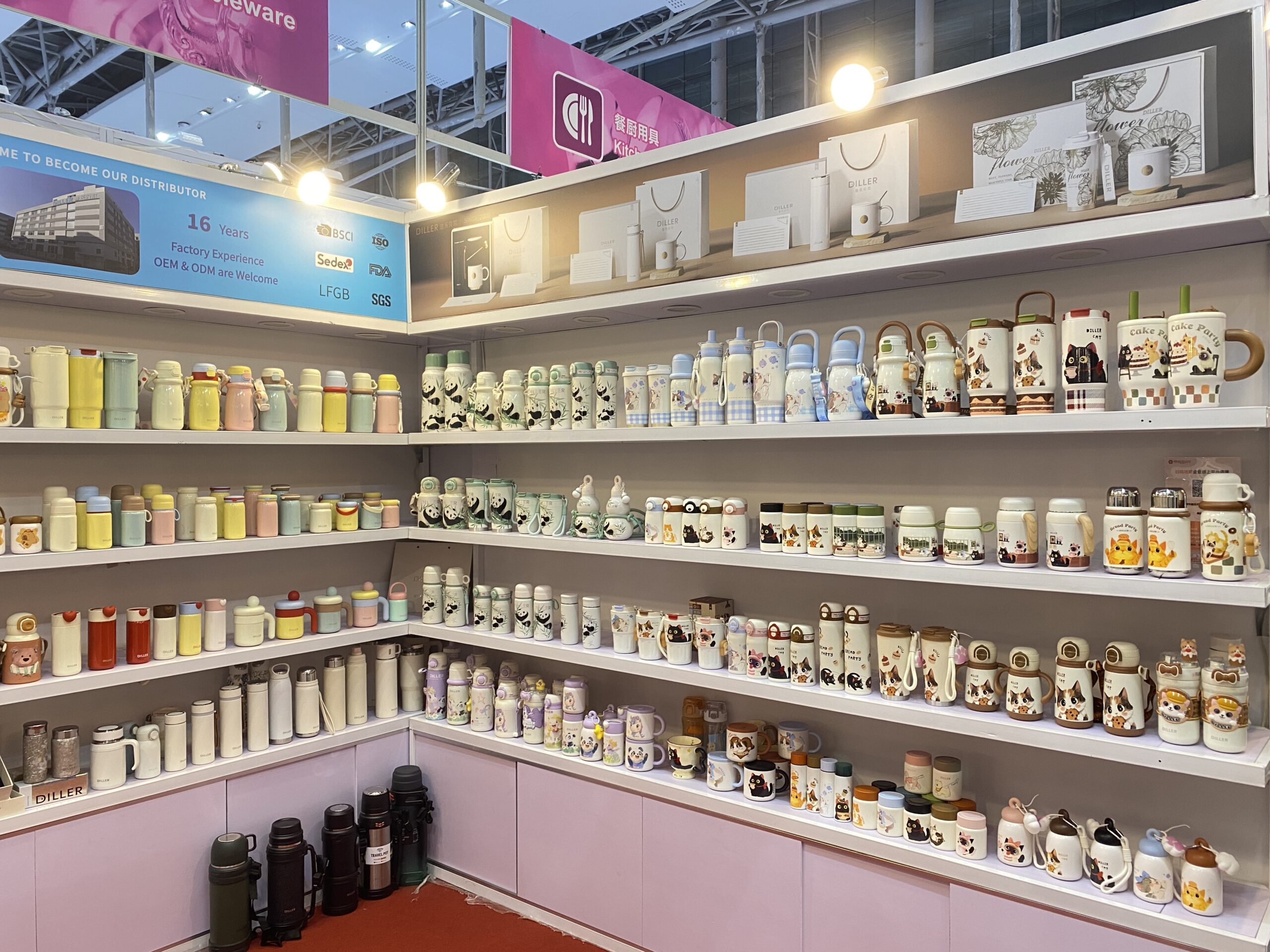
Diller drinkware collection presented to international buyers at the Canton Fair
Product reference / 01
What should a 50-piece trial order prove?
The trial should answer a commercial question: can this specific Diller Kids model earn attention and sell through in the intended channel? It should not try to represent the entire collection. A focused test produces clearer feedback on product-market fit, price positioning, colour preference and customer objections.
Selected in-stock Diller Kids models can start from 50 pieces, subject to inventory, colour availability and market confirmation. Custom logos, packaging, colours or newly produced models may require different quantities. Confirm the scope before presenting the MOQ to your own customers.
Step 1: choose one hero model
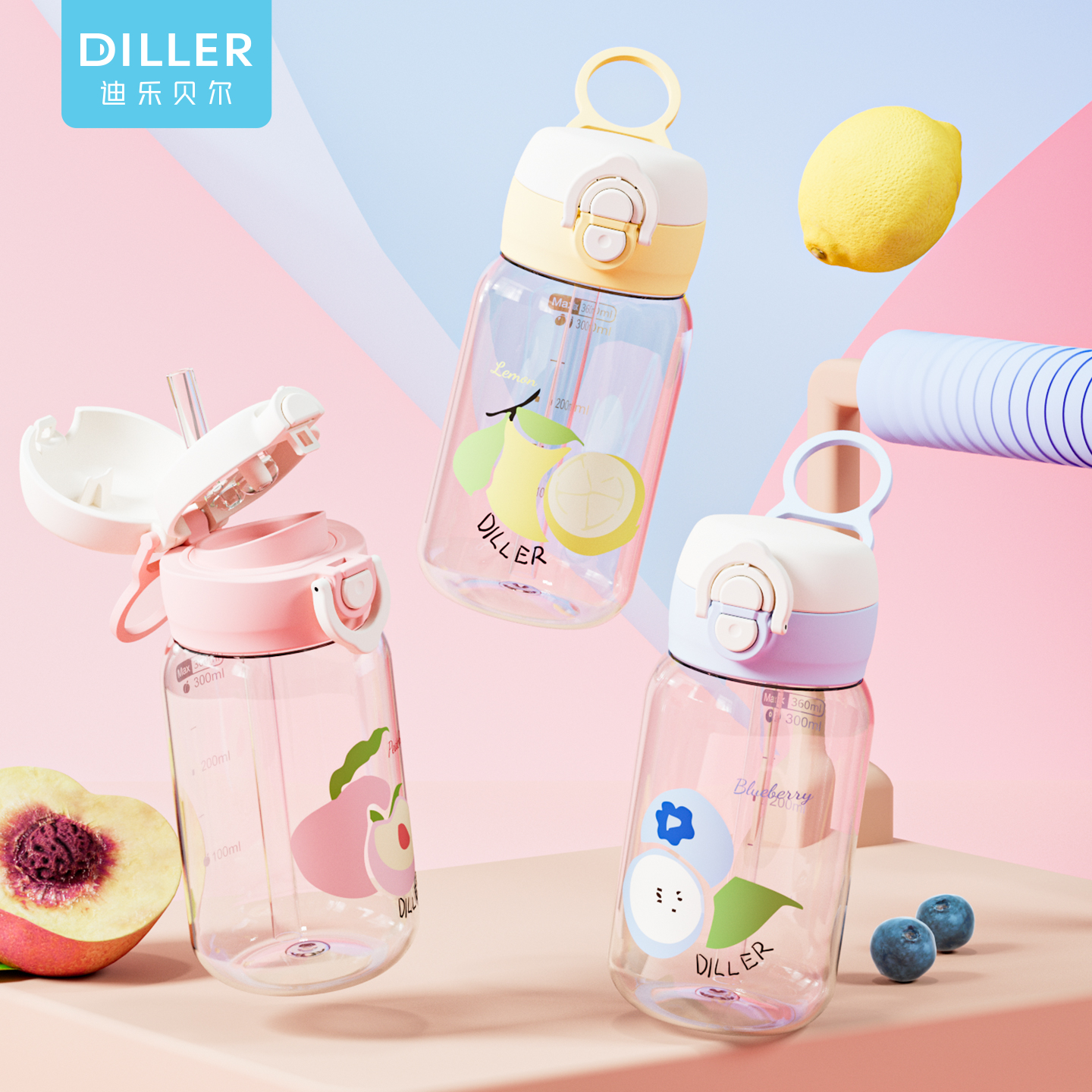
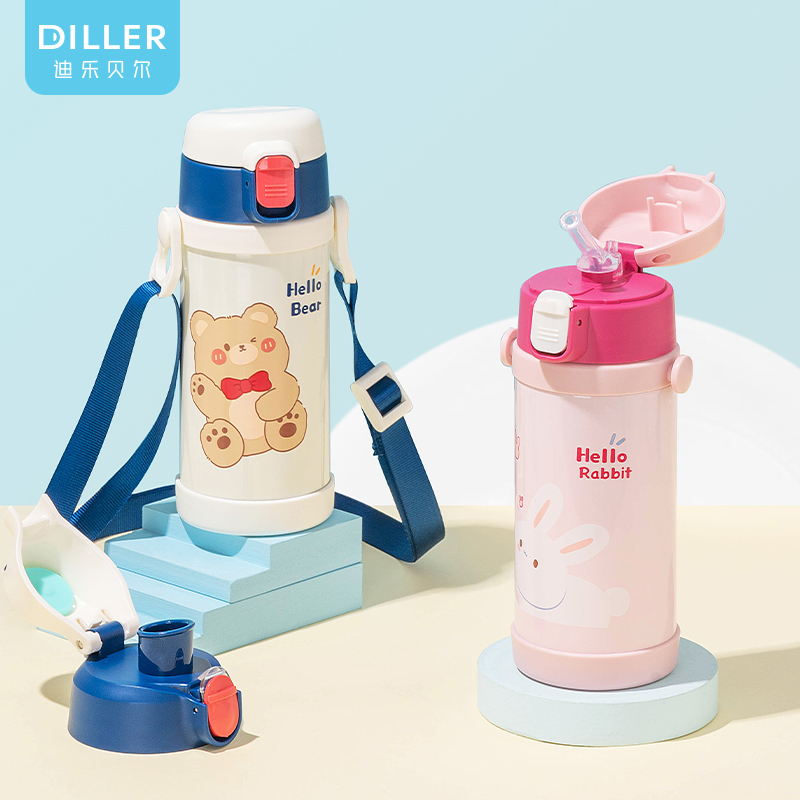
Start with the product role that is easiest to explain in your channel. A compact dual-drink bottle can work as an accessible school option. A larger PPSU bottle can test demand for capacity and carry convenience. An insulated bottle can test a higher-value proposition.
| Trial hypothesis | Useful model direction | Example |
|---|---|---|
| Younger users want a compact dual-drink bottle | 350-450 ml transparent bottle | D2624, 380 ml Tritan |
| School buyers value larger capacity and a strap | 700-900 ml PPSU bottle | D2607, 810 ml PPSU |
| Families will pay more for an insulated format | Compact or mid-size insulated bottle | MLH9091, 350 ml insulated |
Step 2: agree a controlled colour plan
A trial does not need every possible colour. Choose a manageable mix that reflects the channel and creates a useful comparison. Record the quantity by colour before ordering and use the same product-page structure for each variation. The goal is to learn whether colour changes sell-through, not to create unnecessary inventory complexity.
Step 3: prepare the sales content before stock arrives
Product content should explain capacity, materials, drinking modes, carry style, included accessories and cleaning guidance. Use approved images and model-specific information. Avoid adding unsupported claims such as universal leakproof performance or blanket compliance across every country.
Diller Kids can support confirmed partners with available product images, specifications and assortment planning. Review the distributor support programme and identify what your sales team needs before launch.
Step 4: define the trial scorecard
- Sell-through: units sold during the test period.
- Conversion: product-page visits or store enquiries that become orders.
- Colour mix: which variants move first and which remain.
- Customer questions: recurring concerns about size, lid, material or cleaning.
- Returns and defects: reason, model, batch and handling details.
- Channel feedback: what retail staff or marketplace operators need to sell the model more clearly.
Choose the decision point before launch. For example: reorder the same model, change the colour mix, move to a different capacity, or add a second product role. This turns a small order into structured market learning.
Calculate the complete trial cost
The product quotation is only one part of a trial budget. Include sample or inspection costs, local transport, international freight, customs charges, tax, marketplace fees, photography or translation and the inventory time before sale. Use the same cost structure when comparing a Tritan model with an insulated model so the decision is based on landed economics.
Set a target retail range and minimum acceptable margin before confirming the order. Then test a realistic promotional allowance without relying on permanent discounting. If the trial requires a price that cannot support replenishment, the product may be attracting attention without building a sustainable channel.
Keep a small reserve for replacements, content samples and retailer demonstrations. Record these units separately from saleable stock. The trial report should show both commercial sell-through and operational use so the next order quantity is based on a complete picture.
Step 5: scale only after the result is clear
If the hero model performs, the next order can deepen inventory in the winning colours or add one complementary role. A compact Tritan success might lead to a larger school bottle; an insulated success might lead to a second capacity. Keep the range logic visible so customers understand why both products exist.
Diller Kids does not set a fixed entry threshold for distributor conversations. Regional protection can be discussed where a partner makes qualified volume commitments and has a credible market plan. Start by sharing your market, channel and selected model through the partner pricing inquiry.
Frequently asked questions
Does every Diller Kids product have a 50-piece MOQ?
No. The 50-piece starting MOQ applies to selected in-stock models and is subject to current availability, colours and market confirmation. Custom or newly produced orders can require a different quantity.
Can the 50 pieces be mixed across many models?
Confirm this before ordering. The most useful trial usually focuses on one hero model, potentially with an agreed colour mix. Mixing several models can change availability, packing and minimum-quantity conditions.
What should happen after the trial?
Review sell-through, colour performance, customer questions, returns and channel feedback. Then choose one action: reorder the winning model, adjust the mix, change capacity or add one complementary product role.
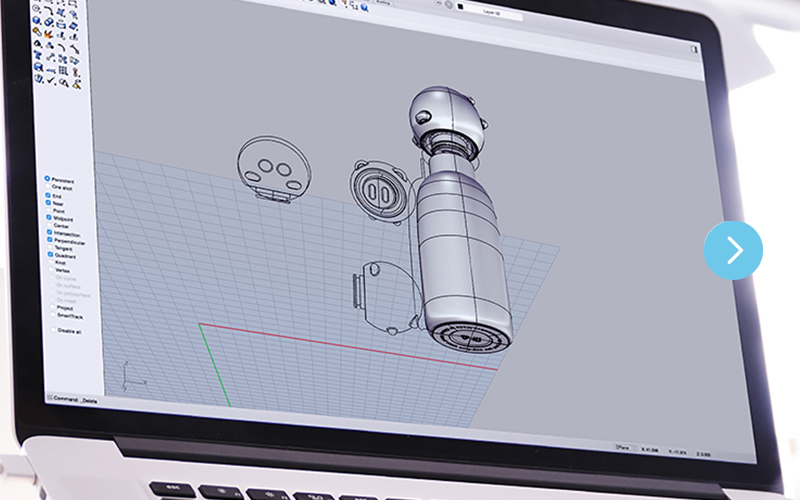
Built on 16 years of drinkware experience.
Our buyer guides combine product development, material, quality-control and international market experience. Confirm final specifications and destination requirements for each selected SKU.
Build a clearer Diller Kids inquiry.
Share your market, channel, preferred models and estimated quantity. We will confirm suitable products, availability and the next commercial step.