

Tritan vs PPSU vs Stainless Steel Kids Bottles
Tritan, PPSU and stainless steel solve different product and retail needs. Tritan supports clear, colourful everyday bottles; PPSU supports robust plastic formats where heat resistance matters; stainless steel supports insulated products. The best material depends on the use case, price band, cleaning expectations and destination requirements.
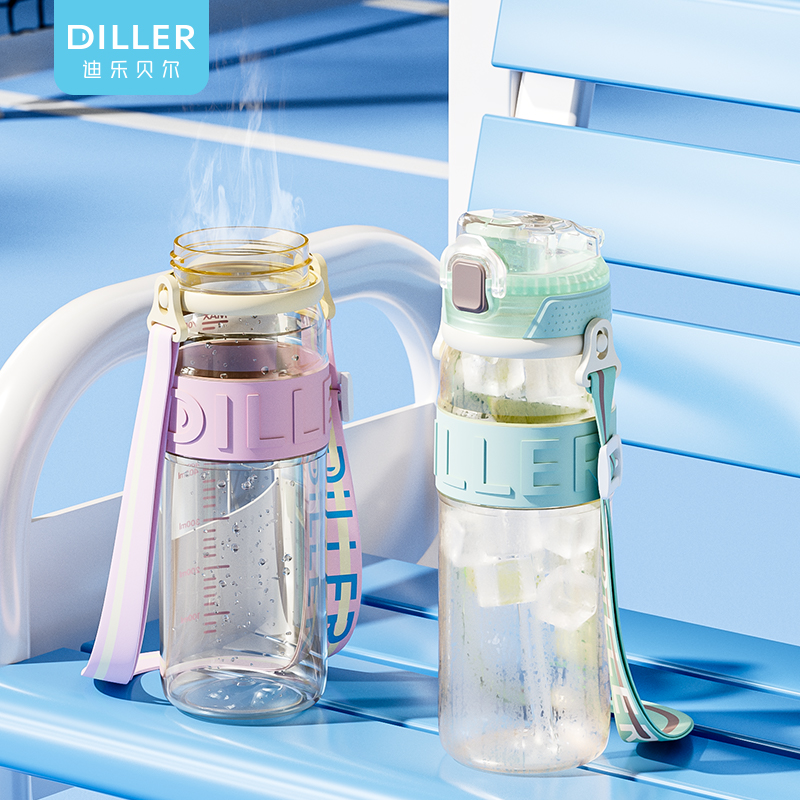
Strap PPSU School Bottle (D2607) with large capacity and dual drinking modes
Product reference / 01
Quick answer: which kids bottle material should a buyer choose?
Choose Tritan when transparent appearance and visible water level support the product story. Choose PPSU when the range needs a robust plastic bottle with greater heat-use flexibility. Choose stainless steel when insulation is the main customer benefit. A balanced wholesale range can use more than one material, provided each group has a distinct role.
Buyers can compare these material groups in the Diller Kids wholesale bottle catalogue before shortlisting individual models.
Tritan, PPSU and stainless steel comparison
| Decision factor | Tritan | PPSU | Stainless steel |
|---|---|---|---|
| Visual character | Clear body and visible colours | Typically amber-toned or coloured translucent body | Opaque body with coating or print |
| Primary range role | Everyday school and sport bottles | Robust plastic school and carry bottles | Insulated school and travel bottles |
| Water visibility | High | Moderate | Not visible |
| Temperature proposition | Non-insulated bottle | Heat-resistant plastic format | Vacuum-insulated format when double-wall construction is used |
| Buyer checks | Grade, colour, lid system and intended-use testing | Grade, intended temperature use, lid system and testing | Steel grade, insulation construction, coating, lid and seals |
When Tritan fits the range
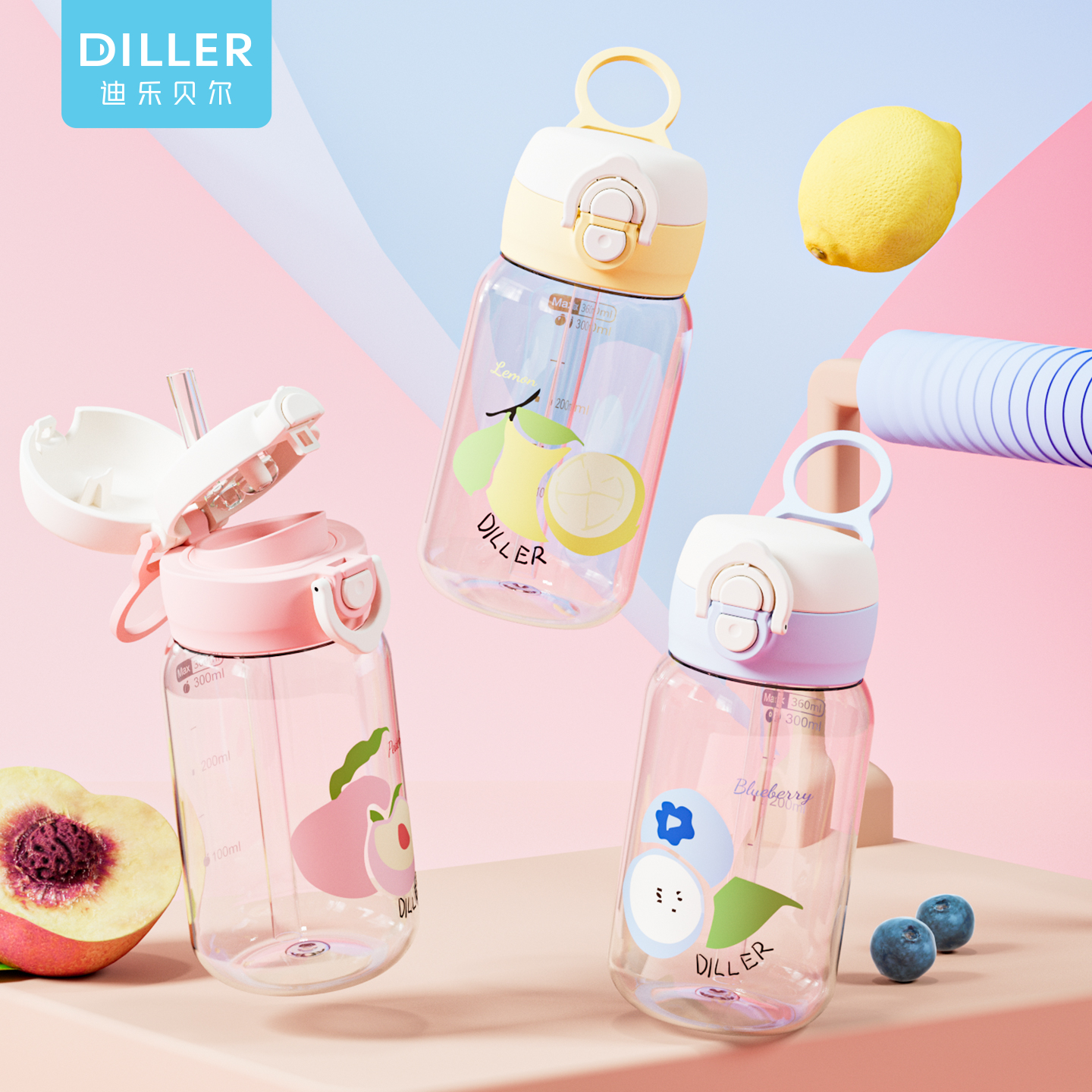
Eastman describes Tritan as a tough, BPA-free copolyester used in reusable products including water bottles. The material can support transparent forms, strong colour presentation and impact resistance. Buyers should still confirm the exact grade and product-level test documentation rather than assuming every clear bottle uses branded Tritan. Read Eastman’s official Tritan FAQ.
Within Diller Kids, the D2624 is a compact 380 ml Tritan bottle with straw and direct-drink modes. The D2621 provides a 520 ml option with a protective silicone grip. Both use transparency as part of the product presentation while serving different age and capacity roles.
When PPSU fits the range
PPSU is useful when buyers want a robust plastic bottle and a product story that includes heat-use flexibility. Its appearance differs from crystal-clear Tritan, so the body colour, printed decoration and lid design should be considered together. PPSU often works well for larger handled or strapped school formats.
The D2607 is an 810 ml PPSU school bottle with a U-shaped handle, detachable strap and two drinking modes. The D2605 is a 750 ml side-handle option. Buyers should confirm intended temperature use, cleaning instructions and model-specific test scope before placing the product in a market.
When stainless steel fits the range
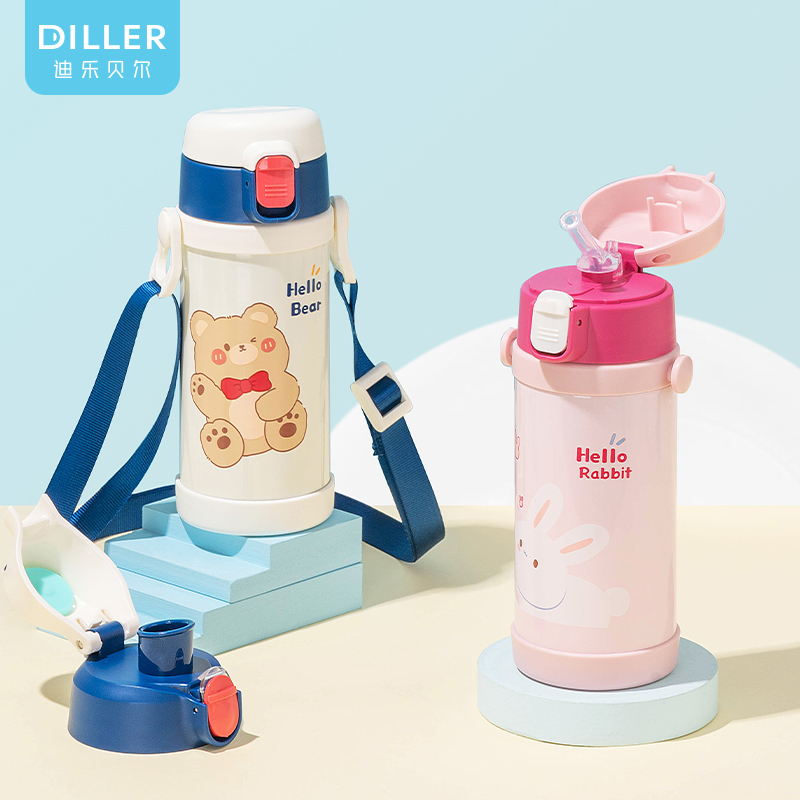
Stainless steel supports an insulated proposition when used in double-wall vacuum construction. The buyer should verify inner steel grade, outer shell, weld and vacuum construction, surface treatment, coating, printing, lid materials and seals. A 316 stainless steel inner can be part of the specification, but it does not replace product-level performance and safety checks.
The MLH9091 is a 350 ml compact insulated bottle with two lid options, while the D9238 provides a 600 ml dual-drink format. See the full wholesale insulated kids bottle range.
Material choice must connect to care instructions
Retail buyers should receive care guidance that matches the finished product, not only the base material. Cleaning suitability can be affected by printed decoration, coating, lid structure, removable seals and accessory materials. A material supplier may describe broad resin performance, but the finished bottle still needs its own use and cleaning instructions.
Ask whether the lid, straw and seals can be removed for cleaning and how they should be reassembled. Confirm whether the finished SKU is suitable for dishwasher use, sterilisation or hot liquids before making those claims. For insulated bottles, clarify whether the lid configuration is intended for hot, warm or cold drinks and how the user should avoid pressure or scalding risks.
Good product content separates verified instructions from assumptions. This protects the customer, reduces avoidable returns and gives distributors a more credible answer when retailers ask how the bottle should be used.
The body material is only one line in the specification
A reliable B2B product brief should identify every food-contact and functional component. That includes the bottle body, lid, straw, spout, seals, coatings, printed decoration and any removable accessories. The ASEAN GMP guideline for food-contact materials recommends documented specifications for starting materials and finished products, along with monitoring and appropriate testing. Review the ASEAN GMP Guideline for Food Contact Materials.
Use the Diller Kids buyer resources to prepare the model list, destination, intended use and documentation request before asking for a quotation.
Frequently asked questions
Is Tritan the same as PPSU?
No. Tritan is a copolyester known for transparency and impact resistance, while PPSU is a different high-performance polymer commonly selected for heat-resistant applications. They create different appearance, use and price propositions.
Is stainless steel always better for children?
Not automatically. Stainless steel is useful for insulated bottles, but transparent plastic bottles can be lighter and make the water level visible. The better choice depends on age group, use case, capacity, filled weight, cleaning and retail positioning.
What documents should a buyer request?
Request model-specific specifications, material declarations, applicable test reports, intended-use conditions, packaging information and inspection requirements. The exact package should match the SKU and destination market rather than a generic material claim.
Sources and further reading
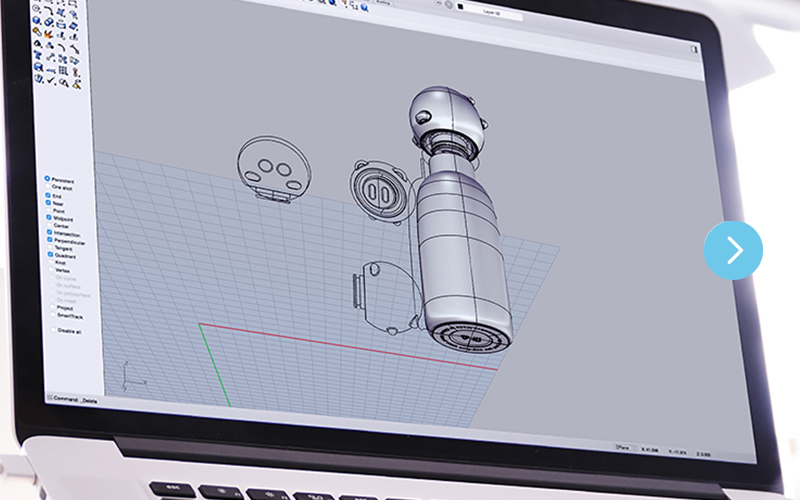
Built on 16 years of drinkware experience.
Our buyer guides combine product development, material, quality-control and international market experience. Confirm final specifications and destination requirements for each selected SKU.
Build a clearer Diller Kids inquiry.
Share your market, channel, preferred models and estimated quantity. We will confirm suitable products, availability and the next commercial step.