
How to Plan Kids Bottle Reorders Without Overstocking
A good kids bottle reorder is placed before the hero models disappear, but after the distributor has enough evidence to avoid repeating slow colours and overlapping SKUs. The decision needs sales by model and colour, current stock, inbound units, lead time, launch events and a clear range role.
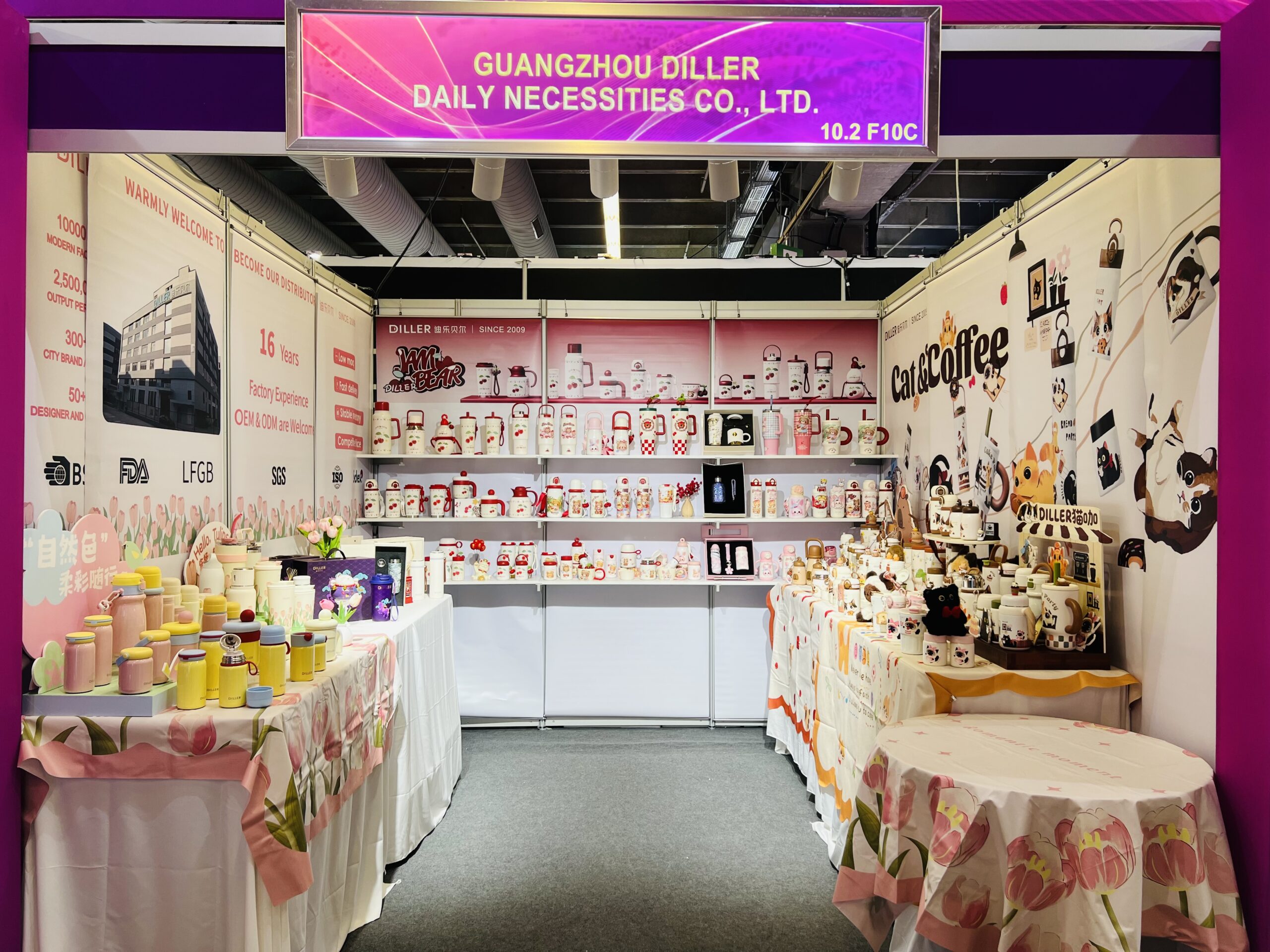
Diller Kids drinkware range presented to international buyers
Product reference / 01
The reorder question is not simply “what sold?”
A complete reorder decision asks what sold, where it sold, whether it was available, what stock is already inbound and how long replacement stock will take. A colour that sold only ten units may be strong if it was available for one week. A colour that sold twenty may be weak if it occupied several stores for two months.
Keep the model role visible in the report. A compact entry bottle, core school model and insulated step-up will not sell at identical rates. The purpose of the range is not to force equal volume; it is to maintain the right products for each customer need.
Build one minimum inventory table
| Field | Why it matters | Common error |
|---|---|---|
| Model and colour | Shows the physical SKU being replenished | Combining every colour into one sales number |
| Units sold by week | Reveals trend and launch effects | Using only lifetime sales |
| Available and inbound stock | Shows the real future position | Ordering without counting confirmed inbound units |
| Out-of-stock days | Explains lost selling time | Treating zero sales as zero demand |
| Lead time and decision date | Defines when action is required | Using an old general lead-time estimate |
| Next campaign or season | Connects stock to planned demand | Repeating the normal weekly rate before a launch |
This table can be maintained in a spreadsheet or inventory system. The important point is consistency. Use the same model and colour names found in quotations, product pages and warehouse records.
Use weeks of cover as a conversation tool
Weeks of cover can be estimated by dividing usable stock by recent average weekly sales. It is a planning signal, not a forecast of certainty. Recent sales may be distorted by a new listing, discount, stock-out, holiday or school season. Review the trend and annotate known events.
Compare cover with the confirmed replenishment timeline. If a core model has six weeks of cover and the full reorder cycle may take longer, the decision cannot wait for stock to become visibly low. If a slow accent colour has twenty weeks of cover, another order may fragment inventory further.
Protect hero models and avoid range gaps
A hero model often supports the rest of the range. It appears in advertising, retailer displays and product comparisons. When it is unavailable, traffic may move to a competitor rather than to a secondary Diller Kids product. Identify hero models by channel and maintain a deliberate service level.
This does not mean over-ordering every colour. Protect the core configurations that carry the main listing and retailer story. Use the colour assortment guide to separate core, accent and market-test roles.
Review demand by channel
Marketplaces, school stores, baby retail, department stores and distributors can create different winners. A larger bottle may lead online in a warm climate, while a compact bottle performs better in a physical store serving younger families. Combine the channels only after the individual patterns are understood.
Ask retailers for reorder requests, stock-on-hand and customer questions where possible. Distributor shipments are not the same as consumer sell-through. A large shipment into one outlet can make a model look successful before it has moved from the shelf.
Deal with slow stock before adding new products
Slow stock is not always a product failure. Check listing accuracy, image quality, availability, store placement and whether the SKU duplicates another model. A product with an unclear range role may improve after merchandising is corrected. Use the online merchandising guide before deciding that demand is absent.
If the product remains slow, stop adding colour depth. Consider whether it can serve a specific channel, bundle or seasonal role without making misleading claims. Record the decision so the same configuration is not reordered automatically.
Separate stock, logo and custom timelines
A confirmed stocked Diller Kids reorder can follow a different process from logo printing, custom packaging or OEM/ODM production. Do not use one generic lead time across all three. Ask for current availability, colour mix, carton quantity, packing and written dispatch estimate for the exact reorder.
Custom work needs artwork approval, sample or pre-production confirmation and a production schedule. The private-label kids bottle guide explains why these decisions should sit outside the normal stock replenishment calculation.
Run a short monthly range review
Review hero availability, stock cover, inbound orders, sales trend, slow stock, returns, service-part demand and upcoming campaigns. Decide which models to deepen, hold, reduce or test. Assign a date and owner to every action. The meeting should end with a purchase decision or a clear reason to wait.
Keep the discussion model-specific. “Tritan is selling well” is too broad if one lid and capacity produce most of the demand. “Blue is slow” is incomplete if it was unavailable in the main channel. Precision makes the next purchase order better.
Kids bottle reorder brief
- List model, colour, available stock, inbound stock and weekly sales.
- Record out-of-stock days and known campaigns or promotions.
- Calculate an indicative weeks-of-cover range.
- Confirm current supplier availability, carton rules and lead time.
- Protect hero models and reduce fragmented slow variations.
- Separate stock, logo, packaging and OEM/ODM reorder paths.
- Set the next review date and the evidence required.
For Diller Kids branded distribution, there is no single fixed distributor threshold. Selected confirmed stock models may begin from MOQ 50, subject to availability and configuration. Share your current range, sales channels and reorder needs through the Diller Kids partner inquiry for model-specific confirmation.
Frequently asked questions
When should a distributor reorder kids water bottles?
Reorder when the remaining weeks of cover approach the confirmed replenishment cycle, adjusted for inbound stock, out-of-stock history, seasonality and planned campaigns.
How should weeks of cover be calculated?
Divide usable stock by recent average weekly sales, then review whether promotions, stock-outs or launch effects distort the average. Treat the result as a planning signal, not a guarantee.
Should every colour be reordered at the same time?
No. Review core, accent and test colours separately. Protect hero configurations while avoiding new orders for slow colours that already have excessive stock cover.
Are stocked and custom kids bottle lead times the same?
No. Stocked products, logo work, custom packaging and OEM/ODM production follow different availability, approval and production paths. Confirm the exact timeline in writing.
Built on 16 years of drinkware experience.
Our buyer guides combine product development, material, quality-control and international market experience. Confirm final specifications and destination requirements for each selected SKU.
Build a clearer Diller Kids inquiry.
Share your market, channel, preferred models and estimated quantity. We will confirm suitable products, availability and the next commercial step.