
How to Build a 12-SKU Kids Water Bottle Opening Range
A first kids bottle order does not need twelve unrelated models. A clearer 12-SKU opening range uses four distinct product roles with three controlled colours in each role. This gives a distributor enough variety to test capacity, material and price without turning the launch into an inventory problem.
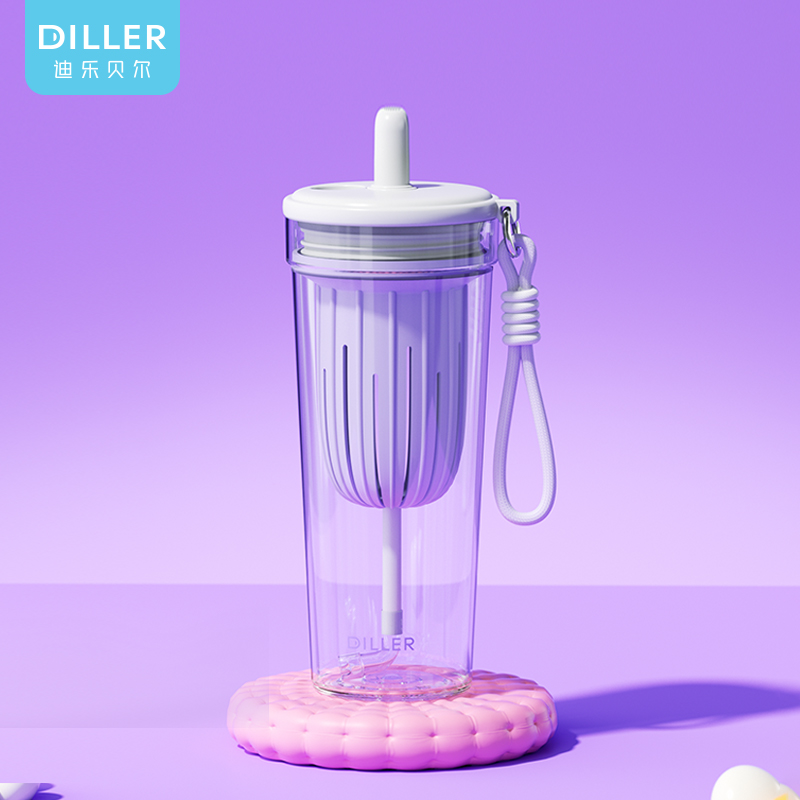
Dual-drink Tritan School Bottle D2407 for retail assortment planning
Product reference / 01
What should a 12-SKU opening range contain?
For a distributor testing a new kids drinkware brand, a practical starting structure is four models multiplied by three colours. The four models can cover compact everyday use, a core school bottle, a larger warm-climate option and an insulated step-up. Three colours per model provide a useful choice without spreading the opening order across too many slow variations.
This is a planning framework, not a universal assortment. The final mix should reflect the country, retail price band, customer age groups and channels. Buyers can compare the current Diller Kids product catalogue and ask the team to confirm which colours and quantities are available before presenting a range to retailers.
Start with four jobs the range must do
| Range role | Decision it solves | Diller Kids reference |
|---|---|---|
| Compact everyday | A manageable bottle for smaller bags, shorter trips or a lower entry price | D2624, 380 ml Tritan |
| Core school | A visible mainstream option with enough capacity and two drinking modes | D2407, 650 ml Tritan |
| Large school and travel | A larger carry option for longer days and warm-climate markets | D2607, 810 ml PPSU |
| Insulated step-up | A higher-value option with a distinct construction and retail story | MLH9091, 350 ml 316 stainless steel |
The point is separation. If two models have the same capacity, lid, carry style and price role, the buyer will struggle to explain why both deserve stock. A product can be attractive on its own and still be unnecessary in the opening range.
Turn four models into twelve measurable SKUs
Choose three colours for each model: two dependable core colours and one controlled test colour. Do not divide every model equally without checking the channel. A baby store, school supplier and marketplace operator may need different colour depth even when they sell the same bottle.
Record the model-colour combination as a physical SKU before ordering. The same name should appear in the quotation, barcode list, product page, carton record and reorder sheet. If a colour is not confirmed as available, do not publish it as current stock. The colour assortment guide explains how to distinguish core, accent and test colours.
Allocate quantity around the question being tested
A trial needs enough depth to reveal whether a model can sell through and be reordered. Spreading 50 pieces across twelve SKUs would leave too little evidence in each variation. The stated MOQ 50 applies to selected confirmed stock models, subject to colour, carton and availability; it should not be interpreted as a promise that every twelve-SKU combination can be mixed into one 50-piece order.
Ask three questions before allocating units: which model will lead advertising, which model will anchor physical retail and which variation carries the highest uncertainty? Give the hero product enough stock to stay available during the test. Keep the uncertain colour or price tier controlled, but not so small that a single store or customer can distort the result.
Make the price ladder visible
The range should offer a reason to trade up. Capacity, PPSU material, insulated construction, lid system or included carry components can support a higher retail position. A change in colour alone is normally a weak reason for a major price step.
Calculate the complete landed and channel cost, not only the unit quotation. Include packing, carton volume, decoration if any, freight assumptions, marketplace fees, local labelling work, content preparation and after-sales support. Then check whether the retail price ladder remains understandable after the full cost is included.
Adjust the same framework by market
Southeast Asia
Warm weather and school-day carry can make larger capacities, visible water levels and straps useful, but filled weight still matters. A distributor should test the bottle in a typical school bag and check whether the chosen capacity matches local school routines. The Southeast Asia buyer guide provides a broader regional checklist.
Middle East
Insulated products can provide a clear premium role, while character details and coordinated colour collections support gifting and family retail. Buyers should still separate verified insulation performance from general marketing language. Review the Middle East insulated bottle guide before finalising the step-up model.
Food-contact requirements and documentation must be matched to the selected product and destination. The ASEAN General Guideline on Food Contact Materials is a useful regional reference, but it does not replace country-specific review or model-level evidence.
Prepare the launch assets before the stock arrives
Each of the twelve SKUs needs an approved main image, exact colour name, capacity, material, drinking style, package contents and model code. The first product-page image should match the selected variation. A distributor should not discover after delivery that a colour has no accurate image or that two listings use different capacity information.
Create one master range sheet and let retailers or marketplace teams work from that source. Add a short comparison showing why the compact, core, large and insulated models are different. This improves staff training and gives the customer a faster decision path.
Use one 30-day launch scorecard
| Measure | Review by | Decision it supports |
|---|---|---|
| Units sold and available days | Model and colour | Reorder depth and stock-out correction |
| Product-page conversion | Model and channel | Content or offer improvement |
| Repeated buyer questions | Topic and SKU | Specification and image updates |
| Returns or service requests | Model and reason | Care, component or quality follow-up |
| Retailer reorder requests | Outlet and model | Evidence for range expansion |
At the end of the review, decide which model to deepen, which colour to reduce and whether a fifth product role is genuinely missing. Expansion should answer a new customer need rather than reward the catalogue for being large.
What to send with a 12-SKU range inquiry
- Country, sales channels and target retail price bands.
- The four range roles and intended customer for each one.
- Preferred materials, capacities and drinking styles.
- Three colour directions per model and any carton-mix constraints.
- Estimated quantity, launch date and whether stock, logo or OEM work is required.
- Required product images, specifications, labels and test-document scope.
Send the brief through the Diller Kids partner inquiry. The team can confirm current models, colours, availability and a realistic opening route before the range is offered to local retailers.
Frequently asked questions
Does a 12-SKU range mean twelve different bottle models?
No. A more manageable structure is four models with three colours each. This creates clear product roles while keeping photography, inventory and replenishment under control.
Can twelve SKUs be mixed into a 50-piece order?
Not automatically. MOQ 50 applies to selected confirmed stock models and remains subject to colour, carton and availability. Ask for the exact model-colour mixing rules before planning the range.
Which four kids bottle roles should a distributor start with?
A useful starting framework is compact everyday, core school, large school or travel, and an insulated step-up. Adjust the roles to local channels, climate and price bands.
When should more models be added?
Add another model when sales and customer questions show a missing capacity, material, drinking style, age role or price tier. Do not add products only to make the catalogue look larger.
Sources and further reading
Built on 16 years of drinkware experience.
Our buyer guides combine product development, material, quality-control and international market experience. Confirm final specifications and destination requirements for each selected SKU.
Build a clearer Diller Kids inquiry.
Share your market, channel, preferred models and estimated quantity. We will confirm suitable products, availability and the next commercial step.